- Tech:NYC Newsletter
- Posts
- Tech:NYC Digest: June 2
Tech:NYC Digest: June 2
Tech:NYC Digest: June 2

Wednesday, June 2, 2021
In today’s digest, New York tops the lowest case rate ranking, in the weeds of workforce vaccinations, and opportunities for new entrepreneurs and early-stage startups.
🎉 Congrats to New York’s newest unicorn Thirty Madison, a healthtech startup working to treat chronic conditions.
Was this digest forwarded to you? Subscribe here.

Cheer to New York: today the state has the lowest weekly positivity rate in the country. (NY State of Politics) NYC’s weekly rate is now down to 0.5 percent.
Here’s a roundup of other updates across the state:
More than one million Excelsior Passes have been downloaded since they were introduced, but officials are hoping they will be adopted more widely. So far, 9.1 million New Yorkers have been fully vaccinated. Major sports venues and a growing number of smaller businesses have embraced the app, but the vast majority of businesses still don’t require any proof of vaccination to enter. (New York Times)
The city’s senior centers have gotten the green light to reopen. Senior centers can resume outdoor programs immediately, and starting June 14th, indoor programs can return. Senior centers will be open to both vaccinated and unvaccinated people, but masks, social distancing, and daily health screens will be required to continue. (CBS New York)
New York opened its rental assistance program for residents who have fallen behind on their rent due to COVID-19. $2.7 billion has been allocated for the program, where residents can apply for up to 12 months of rent and related utility payments. There are a few qualifications to be eligible, but officials estimate the program will serve between 170,000 to 200,000 households. (Gothamist)
For a good FAQ on the details and how to apply, click here.
And one reminder: the second of three official mayoral primary debates airs tonight, when eight Democratic candidates will face off live and in-person for the first time. The full debate broadcasts from 7pm to 9pm ET, but the details for tuning in are a bit more complicated: the first hour airs on WABC Channel 7, and second streams online on WABC and Univision. More options are listed here.
In other reading:
A post-pandemic guide for what to eat, see, and do in NYC this summer (Condé Nast Traveler)
Booze-to-Go Is Here to Stay (Wall Street Journal)
New York City Marriage Bureau Says ‘I Don’t’ to Reopening (Wall Street Journal)

As companies move closer to their summer office reopening dates, most are still working out the details on what it may look like for vaccinated and unvaccinated employees. (New York Times) The solutions need to solve one of three scenarios:
Universal mask requirements: As far as we’ve seen announced, no companies have said they’ll keep mask mandates for everyone, even the vaccinated. It would be hard to justify enforcement of such a rule, since the CDC has given the all-clear for vaccinated individuals to go maskless indoors. But without it, you get cornered into implementing two sets of rules — for those who got the shot and those who haven’t.
Mask requirements based on vaccination status: Most of NYC’s major financial institutions have already informed staff they can return maskless if they’re vaccinated, a measure that seems to have the most consensus across other industries, as well. But CDC guidance has remained the same for unvaccinated individuals, stating they must wear masks in indoor settings. Verifying the status of unvaccinated staffers and enforcing stricter health compliance on them will be the challenge — and even more so for the companies who intend to have 100 percent of the workforces back in-office at some point.
Universal vaccination requirements: Mandating the vaccine is the safest way to bring everyone back to the office, but most employers have been hesitant to take that step — “encouraging” and “rewarding” vaccinations has been a more common step so far.
But we may start seeing more mandates: Companies have now gotten the thumbs up from the EEOC to require the vaccine to any staffer who enters the office, clearing the legal hurdles that companies expected to confront. (Axios)
Gov. Cuomo also said today that restaurants, entertainment venues, and other businesses will increasingly start requiring vaccination proof to enter, and that trend could extend to offices over time. Some experts say mandates will become more commonplace when the vaccines have received full FDA approval — not just emergency use authorization — and become a more regular part of an individuals’ larger immunization schedule. (CNBC)
Go deeper: Axios spoke with the EEOC lawyer behind the decision letting US employers mandate vaccines — and whether more guidance may be coming. Listen here.
Or just bypass it all: Some employees will just choose not to deal with a new set of office rules by staying remote forever — if their companies let them.
SAP is the latest tech company to adopt a “flexible forever” approach, allowing its staff to work completely from home, completely from any office worldwide, or somewhere in between. (Reuters) And its 100,000 employees will certainly take advantage of it: more than half said in internal polling that they’d only go into an office one or two days per week.
The takeaway: For now, especially with relatively generous remote and hybrid options through the year (and some into 2022), companies will likely take a wait-and-see approach. If voluntary vaccinations work, then the problem may just solve itself before it even really becomes one.
Further reading:
The Hybrid Model Is No Longer Theory, It’s Tactic (Crunchbase News)
Employees Are Quitting Instead of Giving Up WFH (Bloomberg)
Americans Are Done with 5-Days a Week in the office. Here’s What That Means for the Economy (Bloomberg)

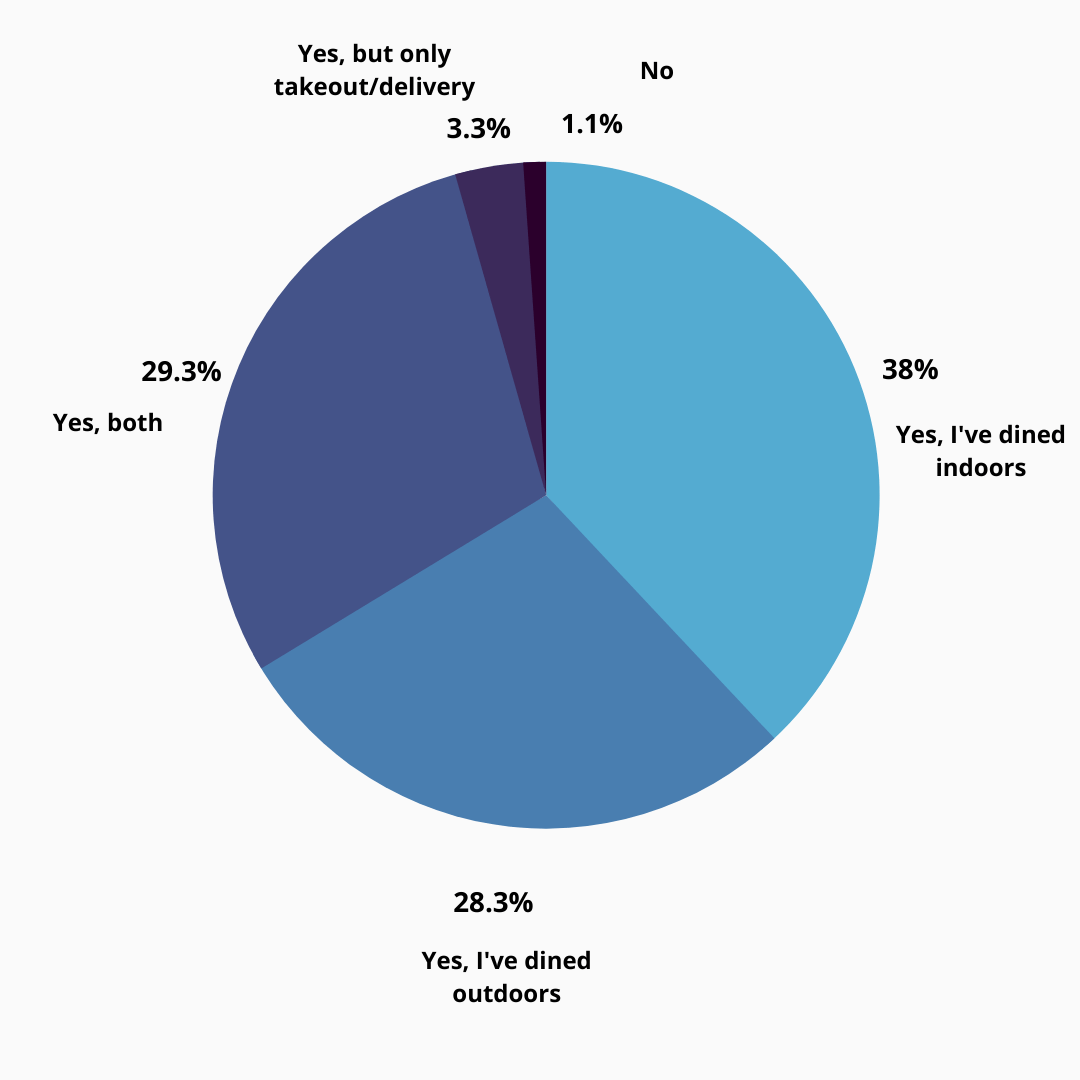
in NYC, allowing restaurants and bars to stay open however late their license provides. While some outdoor dining is still limited by a midnight curfew, there are effectively no sweeping restrictions on New York eateries as the city marks its lowest positivity rate since the pandemic began. In the last month, have you patronized a restaurant?

Ajax Therapeutics, a New York City-based biotech company developing treatments for hematologic malignancies, raised $40 million in funding. EcoR1 Capital led the round and was joined by investors Boxer Capital, Inning One Ventures, Schrodinger, Memorial Sloan Kettering Cancer Center, and NYU Langone Health. (BusinessWire)
Nayya, a New York City-based digital health insurance benefits platform, raised $37 million in Series B funding. SVB Capital and ICONIQ Growth led the round and were joined by investors Bow Capital, Felicis Ventures, Social Leverage, SemperVirens, Guardian Strategic Ventures, Unum Business VEntures, and CNO Financial Group. (BusinessWire)
Pinwheel, a New York-based payroll API, has raised $20M in Series A funding. Coatue led, and was joined by Primary Ventures, Semper Virens, First Round Capital and Upfront Ventures. (Finextra)
Spruce, a New York-based title and residential closing tech platform, raised $60 million in Series C funding. Zigg Capital led, and was joined by Bessemer Venture Partners and Scale Venture Partners. (The Real Deal)
Thirty Madison, a New York-based maker of products for chronic health conditions, raised $140 million in Series C funding, valuing it at more than $1 billion. HealthQuest Capital led, and was joined by Mousse Partners, Bracket Capital and insiders Polaris Partners, Johnson & Johnson Northzone and Greycroft. (Bloomberg)
Yieldstreet, a New York-based alternative investing platform, raised $100 million in Series C funding. Tarsadia Investments led, and was joined by Kingfisher Investment, Top Tier Capital Partners and Gaingels. Existing investors, Edison Partners, Soros Fund Management, Greenspring Associates, Raine Ventures, Greycroft and Expansion VC. (TechCrunch)

The New York City Economic Development Corporation is seeking proposals from organizations interested in operating the Pandemic Response Institute. Interested operators will mobilize a “whole of society” approach in which public, private, and nonprofit actors across sectors and topic areas (public health, life sciences, advanced manufacturing, economic development, and housing) work together to prepare for future public health emergencies in an inclusive, equitable, and holistic way. Learn more and submit a proposal by June 4 here.
The Grand Central Tech residency is accepting applications for its seventh class. Run by Company Ventures, the program is no equity, no strings attached, and open to early stage startup teams and entrepreneurs. Learn more and apply by June 25th here.
The New York Clean Transportation Prizes, a program administered by NYSERDA, is offering funding support to organizations with innovative solutions in at least one of three areas: air pollution reduction and clean neighborhoods; electric mobility; and electrified medium- and heavy-duty truck and bus transportation. Learn more and register your proposal by July 22.
The MetaProp Accelerator at Columbia University is accepting applications for its next cohort. The 22-week program is open to early-stage real estate technology companies seeking to raise new financing, drive business growth, and accelerate market penetration. Learn more and apply by July 30 here.
The NYC Dept. of Small Business Services is accepting applications for its FastTrac TechVenture bootcamp, a no-cost, immersive 10-session program open to aspiring technology entrepreneurs at the early stages of a new business idea. Learn more and apply here.

T minus 20 days until Primary Day in NYC! Soft Power Vote is a resource hub put together by three NYC residents who were looking for more information about their ballots and local politics. They turned to art, design, and social media to make plenty of resources
— their
is particularly helpful and easy to understand.
Any feedback or suggestions of things to add? Get in touch here. Was this digest forwarded to you? Sign up to receive it directly here.