- Tech:NYC Newsletter
- Posts
- Tech:NYC Digest: July 20
Tech:NYC Digest: July 20
Tech:NYC Digest: July 20

Tuesday, July 20, 2021
In today’s digest, why mass transit is key to NYC’s economic recovery, the BOE (finally!) certified the primary election results, vax mandates come for NYC public hospitals, and the startups making remote work actually work.
Was this digest forwarded to you? Subscribe here.

Now more than a month into NYC’s full reopening, it stands to reason that as New Yorkers feel more comfortable venturing out into the city, mass transit ridership is up.
While the city subway and bus ridership numbers continue making incremental gains, we're still far from normal. General ridership remains down by more than 50 percent, and even those who have returned to mass transit aren’t doing so as regularly.
Tech:NYC’s poll data found that daily subway use was just 5.3 percent in March, increasing to just over 10 percent in June. By contrast, the number of people who were taking the subway at least once a week increased from 17.6 percent to 29 percent in the same time.
MTA leaders reconvened yesterday for the first in-person board meeting since the pandemic began, and much of the meeting was dedicated to ongoing efforts to increase ridership — and therefore revenue.
The agency decided to hold off on planned fare hikes until at least 2022, so as to not further deter riders still wary of the COVID-19 risks on the system. (New York Daily News)
It’s the second time fare hikes have been pushed back due to the pandemic. Transit providers rely heavily on fare revenue for day-to-day expenses, but officials claim it’s a loss worth taking in the interest of long-term recovery efforts. That means finding alternate ways to raise revenue to support the system’s operations.
The region’s buses, trains, and subways are currently running largely courtesy of roughly $18.6 billion in federal aid. If ridership doesn’t return to pre-pandemic levels, the agencies could potentially face the same doomsday scenarios expected earlier in the pandemic. (Bloomberg)
This all makes implementing congestion pricing more urgent. Road traffic in NYC is often touted as the worst in the nation, and it’s already just about back to pre-pandemic levels. (New York Post) Mayor de Blasio today called for the MTA and other officials to expedite getting the congestion pricing system up and running.
With one of those oversized prop checks, the mayor said it could provide a $15 billion boost to the city's transit infrastructure. (amNY)
Tech:NYC has stood with a coalition of transit advocates, business groups, and other city leaders in favor of congestion pricing for years, and we’ll repeat that here: the city can’t fully recover until public transit recovers, and we should support every possible effort to invest in our infrastructure and make it accessible.
In other news:
The NYC Board of Elections finally certified the results of the June 22 primary today, with the exception of two City Council seats — those races in Harlem and Staten Island are within the margin of automatically triggering a hand recount. (CBS New York)
Workers in NYC public hospitals and city-run clinics will now be required to get vaccinated or take weekly COVID-19 tests. (New York Times) State data shows that one-third of New York hospital workers are unvaccinated. That number jumps to 40 percent of hospital staff across Brooklyn, the Bronx, and Staten Island. (New York Post)
Gov. Cuomo signed several bills aimed at boosting voter participation. Registered voters can now request an absentee ballot by letter or email instead of a signed application. Additionally, federal write-in ballots, military ballots, special presidential ballots, and federal ballots can now be postmarked up to Election Day for them to be counted in an election. (Gothamist)

Unless your company was already remote-first before the pandemic, it’s been a challenging year for workplace culture. The reason why: there was no time to prepare for the abrupt shift to WFH. But now that it will become an element of most workplaces more long-term, there are now entire startups dedicated to helping other startups make those adjustments.
Firstbase, which went all-remote back in 2018, is now helping other companies make remote work actually work. (Axios)
“The whole aim is to make remote workers as safe, comfortable and as productive working at home as they would be at the office,” said CEO Chris Herd.
The company began creating its own internal tools to track the technology its workers needed to be successful outside a typical office environment, and in 2019, began offering those insights to clients — just ahead of the pandemic. They now provide software that helps companies manage the hardware remote workers need, as well as remote IT support and other services.
The otherwise mundane access to desk chairs, headsets, laptop monitors, and other office equipment have suddenly become the perks workers are looking for when putting together an office-quality setup at home.
For Herd, the remote work opportunities are as much about life outside of work: “To be honest, I don't care about the future of work. What we're really talking about is the future of living.”
In related reading:
5 reasons businesses should make remote work more permanent (Fast Company)
How to achieve sustainable remote work: companies must move away from visible busyness, and toward defined outcomes and goals (The New Yorker)
Too Many Zoom Meetings? ‘Core Hours’ Keep Some Remote Workers Productive and Sane (Wall Street Journal)

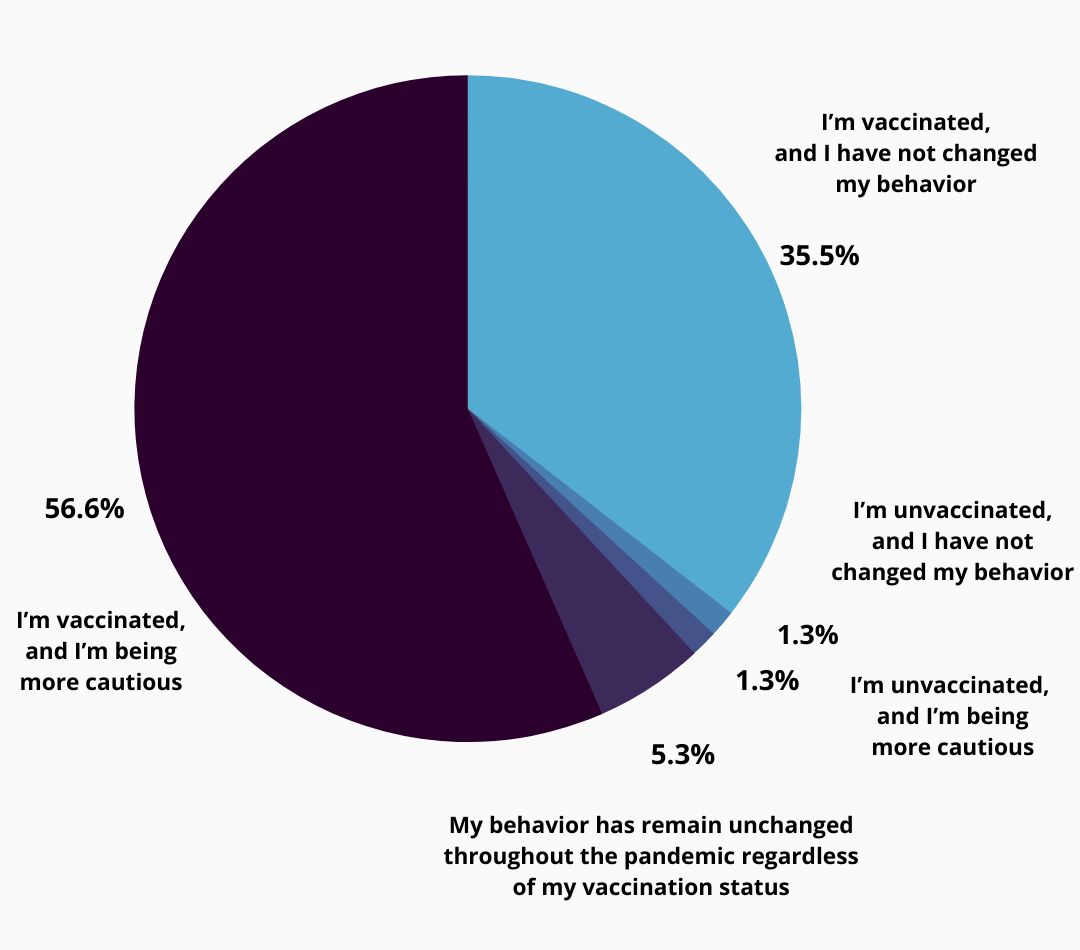
The latest results:
It’s been over a month since most COVID restrictions in the state were lifted. While it may seem like the pandemic is subsiding in New York, for the past week, cases have been
due to the highly-infectious Delta variant. Have you become more cautious due to the Delta variant?

Aperture Venture Capital, a New York City-based seed-stage venture firm that invests in Black, Latin and female founders, raised a $75 million fund. FIS and Truist Financial anchor the fund and are joined by PayPal. (Newswire)
Esusu, a New York-based rent-reporting alternative to credit, raised $10 million in Series A funding. Motley Fool Ventures led the round and was joined by investors including Serena Ventures, The Equity Alliance, Predictive VC, Concrete Rose Capital, Impact America Fund, Global Impact Fund, Next Play Ventures, and Zeal Capital Partners. (CNBC)
JOKR, a New York-based grocery delivery startup, raised $170 million in Series A funding co-led by GGV Capital, Balderton Capital and Tiger Global. Other investors include Activant Capital, Greycroft, FJ Labs, Kaszek, Monashees, and HV Capital. (TechCrunch)
LeagueApps, a New York-based youth sports management platform, raised $15 million in Series B funding. Contour Venture Partners led, and was joined by Major League Baseball and Elysian Park Ventures. (TechCrunch)
OpenSea, a New York-based NFT marketplace, raised $100 million in Series B funding at a $1.5 billion valuation led by insider Andreessen Horowitz. Other backers include Coatue, CAA, Michael Ovitz, Kevin Hartz, Kevin Durant, and Ashton Kutcher. (VentureBeat)
Recapped, a Brooklyn-based provider of collaborative sales software, raised $6.3 million in seed funding led by Charles River Ventures. Entrepreneurs Roundtable Accelerator, CoFound, AirAngels, Prime Set, Twenty5Twenty, Peter Kazanjy, Alan Chung and other angels also participated in the round. (TechCrunch)
Tilting Point, a New York City-based free-to-play games publisher, raised $235 million. General Atlantic led the round and was joined by investors including Red Ventures and Kamerra. (VentureBeat)
TMRW Life Sciences, an automated platform for monitoring and storing of frozen eggs and embryos used in in vitro fertilization, raised $105 million in Series C equity and debt funding. Transformation Capital led, and was joined by GV, Casdin Capital, Peter Thiel, Anne and Susan Wojcicki, 5AM Ventures, and Life Sciences Innovation Fund. (FinSMEs)
Vestwell, a New York City-based 401(k) recordkeeping tech company, raised $70 million in Series C funding. Wells Fargo Strategic Capital and Fin Venture Capital led the round and were joined by investors including Goldman Sachs and Morgan Stanley. (PRWeb)

July 22: Virtual: How AI Technology Affects Hiring, with RippleMatch chief of staff Troy LeClaire, Fetcher CEO Andres Banks, and Ordergroove SVP of People Karen Weeks. Hosted by NYCETC and Hot Bread Kitchen. Register here.
July 22: Virtual: Protecting New York Summit, with NYC Public Advocate Jumaane Williams, Dataminr chief strategy officer Peter Bailey, NYC Cyber Deputy CISO Colin Ahern, and others. Hosted by City & State. Register here.
Any feedback or suggestions of things to add? Get in touch here. Was this digest forwarded to you? Sign up to receive it directly here.