- Tech:NYC Newsletter
- Posts
- Tech:NYC Digest: February 19
Tech:NYC Digest: February 19
Tech:NYC Digest: February 19

Friday, February 19, 2021As NYC works through another surge of the coronavirus, the digest focuses on the resources that help you make decisions about your businesses and your lives as New Yorkers.Was this digest forwarded to you? Subscribe here.

The latest: US cases significantly down week-over-week, but stunted testing may be masking true numbers; NYC indoor dining expanding to 35 percent capacity next week; new mass vaccination sites opening in Brooklyn, Queens, upstate cities to target underserved zip codes; Uber pushes WFH timeline to mid-September, says it will remain flexible.
By the Numbers:
New York State: 1,564,483 (+8,710)
New York City: 676,651 (+4,872)
Statewide Fatalities: 37,675 (+116)
NYC Positivity Rates:
NYS reports: 4.4 percent (+0.1 percent)
NYC reports: 7.3 percent (+0.1 percent)
Vaccine Administering Progress:
NYS first doses: 2,147,076 (+37,386)
NYC first doses: 864,368 (+11,405)
General Updates:
Positivity rates continue to move in the right direction, and Gov. Cuomo said today that 12.1 percent of New Yorkers have now received at least one vaccine dose statewide. (NYS)
Positivity rates are down across all five NYC boroughs, with the lowest in Manhattan at three percent, and the highest in the Bronx at 6.2 percent — but even the Bronx is down from 7.8 percent on Jan. 4.
Nationwide, the US data is showing a big decline in new COVID-19 cases — down 29 percent compared to this time last week — but there’s a big caveat: winter weather in many states has closed testing sites and getting accurate data over the last several days has been particularly challenging. (CNN)
NYC restaurants will be able to expand indoor dining from 25 percent to 35 percent capacity next Friday, Feb. 26. (Eater NY) That makes the city’s capacity limit consistent with that in New Jersey. The rest of New York State currently allows for indoor dining at 50 percent.
Eleven rapid testing sites are opening across NYC beginning today. A network of three providers will operate those sites, making FDA-approved antigen tests available for no more than $30, where results are delivered in 30 minutes or less.
Find more information here, and get a list of site locations here.
Gov. Cuomo announced a nursing home reform agenda he will propose be included in the state’s final budget. He said he will not sign off on a budget agreement with the Legislature unless that agenda is included. (NY State of Politics)
In an interview today, Dr. Fauci addressed what seem to be moving goalposts for when the general public will have access to the vaccine. Here’s three markers he said we should expect. Spoiler: young people will be able to start getting it in May or June, there will be enough for all of those people by July, and completing the actual appointments for those people will take through the end of summer.
One good read: This weekend’s New York Times Magazine is a special issue dedicated to the future of work. For many, it will never be the same. (New York Times)

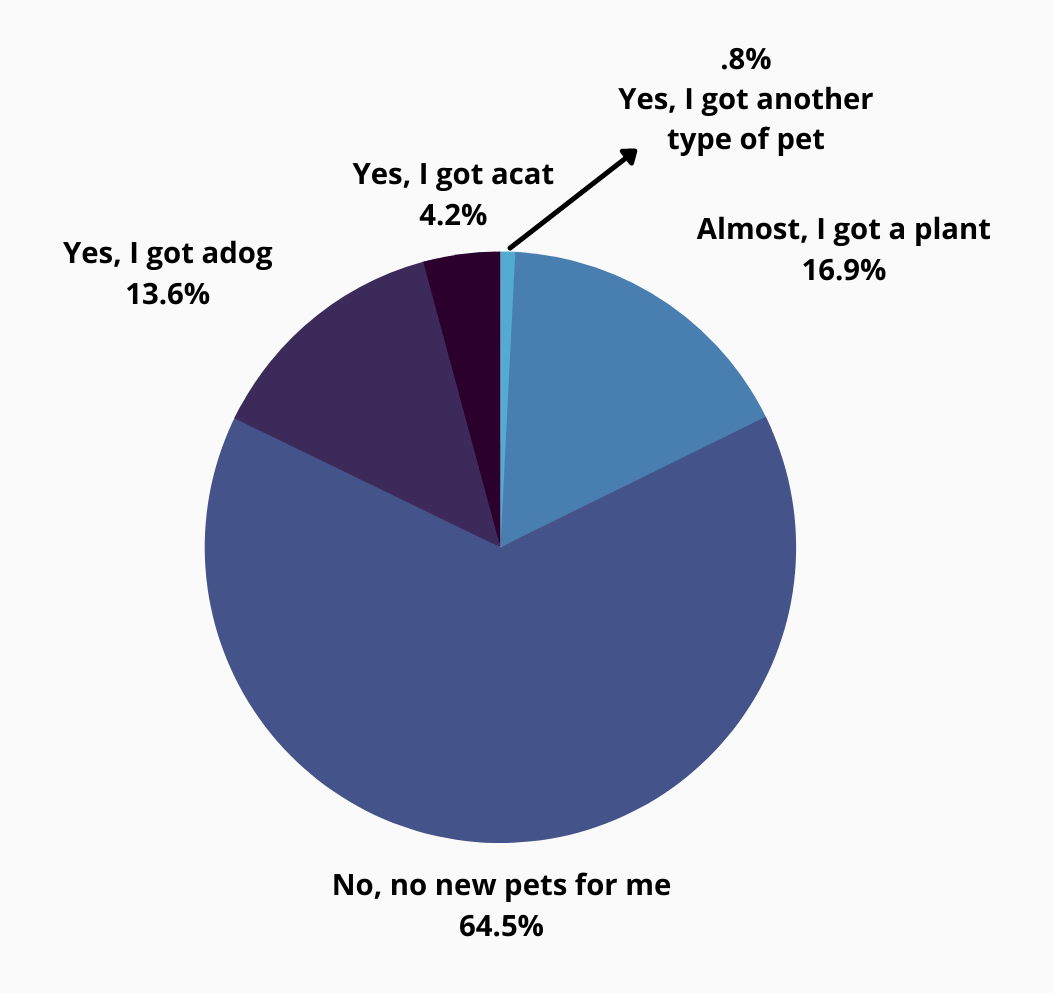
The latest results: Pet adoptions during the pandemic continue to surge as people (including three Tech:NYC team members!) want a furry friend (or fish, rabbit, snail…) to share the many hours stuck at home. Some shelters have even reported running out of dogs to be adopted. Have you adopted a pet during the pandemic?
Today's poll
: NYC began allowing indoor dining again exactly one week ago, and today, officials announced it could expand slightly from a 25 percent to 35 percent capacity limit next week. But many patrons are still leery of being inside, and restaurant owners are warning
for a struggling industry. What do you think would benefit restaurants most immediately?
*|SURVEY: Further increasing capacity restrictions on indoor dining|*
*|SURVEY: Extending curfews beyond 11pm|*
*|SURVEY: Extending commercial rent relief measures|*
*|SURVEY: Securing more government aid|*
Find the poll results from all previous editions of this newsletter here.

Two mass vaccination sites in NYC — set up jointly by FEMA and New York State — will open in places where positivity rates are still high and vaccination rates are disproportionately low. Those sites are at Medgar Evers College in Brooklyn and York College in Queens. (Patch Brooklyn)
Scheduling for appointments at these sites begins tomorrow at 8am, but only for residents of priority ZIP codes in Brooklyn and Queens areas near those sites.
Scheduling for those people is open for a one-week window; after one week, scheduling opens up to all residents in that borough.
Four more mass vaccination sites operated by FEMA the same way, with the same ZIP code-based priority rules, will open March 3 in Rochester, Albany, Buffalo, and Yonkers. (NYS) And Costco locations in every borough, except the Bronx, will soon offer vaccines to eligible groups. (ABC New York)
The Dept. of Health says it will allow visitations at nursing homes and other long-term health centers in compliance with CDC guidance. The agency has recommended visitors take a rapid test, which will be provided by the agency, before entry. (NY State of Politics) This comes now that 73 percent of nursing home residents have been vaccinated.
Testing protocols on college and university campuses has also been updated:
Campuses that test at least 25 percent of total on-campus students, faculty, and staff weekly will not be required to go on pause unless their positivity rate exceeds five percent during a 14-day rolling period.
Campuses that don’t meet that threshold must go on pause if 100 individuals test positive during a 14-day rolling period. (WSYR)
The FDA has allocated 4,610 doses of the therapeutic bamlanivimab to New York. The drug has been shown to reduce COVID hospitalization or ER visits in high-risk patients within 28 days after treatment.
Related reading:
“Vaccine hunters” are turning to Facebook groups and Reddit threads to help people find unused doses (Axios)
NYC Wants You To Follow These Guidelines if You Choose to Dine Indoors (Thrillist)
Congress is still writing up Biden’s stimulus plan. Here’s what’s in it. (Vox)
Lessons from Virtual Kindergarten For All of Us (New York Times)
Working:
Uber is extending its WFH policy through Sept. 13. (TechCrunch)
The extension takes into consideration that different localities and countries are in different stages of recovery, as well as the start of the school year.
The company is also encouraging all employees to get vaccinated when they are eligible, reminding them they will get special time off to do so.
Post-pandemic, the company expects it will have a hybrid workplace model, but “it’s still a work in progress” and no details have been finalized yet.
Barclays CEO Jes Staley expects staff to return to the office in full “sometime this year.” Three quarters of the bank’s 80,000 staff are currently WFH. (Bloomberg)
Related reading:
Who has the power to mandate vaccines? Employers (Quartz)
A return to office may be coming. For employees, this is the time to make a plan. (CNBC)
WFH Means I Can Finally Eat Messy Toast for Lunch (Bon Appetit)
Request: please let us know as your return-to-office policies are developed and what considerations your companies are taking for developing them. Sharing this information is helpful to companies and employees across the NYC ecosystem and can be kept anonymous.
Recruit: A tech talent and job opportunities board from Tech:NYC and AlleyCorp compiles NYC tech workers looking for new roles and NYC-based tech companies hiring open positions. To contribute to the board, click here.Events:
February 23: Virtual: AI and Patent Law: What if AI Becomes an Inventor?, with the American Patent Agency PC. Hosted by Newlab. (Details)
March 3: Virtual: How the Big Apple Will Regain Its Shine, with Sidewalk Labs chairman and CEO Dan Doctoroff. Hosted by Crain’s New York. (Details)
March 4: Virtual: Life Sciences and the Next Frontier of Technology, with bestselling biographer Walter Isaacson and Nomad Health CEO Dr. Alexi Nazem. Hosted by Company Ventures. (Details)

Check these sources for verified information from government agencies and public health authorities:
Was this digest forwarded to you? Sign up to
.