- Tech:NYC Newsletter
- Posts
- Tech:NYC Digest: April 12
Tech:NYC Digest: April 12
Tech:NYC Digest: April 12

Monday, April 12, 2021As the vaccination rollout progresses and NYC continues to respond to the pandemic, this digest focuses on the resources that help you make decisions about your businesses and your lives as New Yorkers.Was this digest forwarded to you? Subscribe here.

The latest: J&J production issues hampers its vaccine supply distribution by nearly 90 percent; Pfizer asks FDA for emergency use authorization for 12-15 year olds; NY colleges and universities to get vaccines directly to inoculate students before semester’s end; subway sees rider spike with over two million taking trains on the busiest day of the pandemic last week.
By the Numbers:
New York State: 1,946,330 (+4,926)
New York City: 874,181 (+2,176)
Statewide Fatalities: 41,198 (+58)
NYC Positivity Rates:
NYS reports: 3.5 percent (-0.1 percent)
NYC reports: 5.3 percent (-0.3 percent)
Vaccine Progress:
NYS first doses administered: 7,571,549
NYC first doses administered: 2,754,785
General Updates:
To start the week with some good news: the entire Tech:NYC team has received their first dose of the vaccine! Second dose appointments (and related PTO hours for those second dose side effects) are all on the books, so here’s a few links we’re finding particularly helpful:
For the first two weeks after a first dose, recipients are almost just as vulnerable to infection as before, but after that, protection kicks in very quickly. (New York Magazine) For Pfizer, clinical data show Day 11 after your first dose is the magic spot for when you can truly consider yourself vaccinated.
But CDC recommendations warn you can’t be fully protected until two weeks after your second dose. (CDC) That’s the point where the agency says it’s safe to travel and visit with unmasked people with low risk.
What remains less clear is how long these vaccines confer immunity, if they’ll need to be tweaked to account for variant strains, or if regular booster shots will be needed in the future. Here’s a good roundup of what we know about those questions so far.
And if you’re still on the hunt for your first appointment, here are the links again to search availability at state-run sites and city-run sites, as well as the tools to help scan across sites like pharmacies and other pop-up sites: NYC Vaccine List, Vaccine Finder, and TurboVax (yes, after a little snafu, it’s back online!).
There are growing signs that parts of the country are close to hitting a vaccine wall. (Axios) States in the South, in particular, are administering the lowest portion of the vaccine doses that they receive from the federal government, a sign that even as supply continues to those places, demand is low — well before they have reached herd immunity.
As of yesterday, 38 percent of New Yorkers have received their first dose, and 25 percent have completed their vaccines. (NYS)
According to new data from the CDC, Johnson & Johnson will allocate a whopping 86 percent fewer doses of its vaccine in the US beginning this week than were distributed last week. (Gothamist) The sudden drop is largely due to safety and supply chain problems at the Baltimore plant manufacturing most of those doses, which must be cleared by the FDA before it can resume production.
But Gov. Cuomo said that vaccine appointments already made across the state aren’t expected to be affected by the reduction. (NY State of Politics)
Meanwhile, Pfizer has asked the FDA to expand emergency use authorization of the COVID-19 vaccine to adolescents ages 12-15. (Axios) And the US Army is developing a COVID-19 vaccine it hopes will protect against variant strains. (Fortune)

The latest results: We’re approaching two months until Primary Day in NYC’s election for mayor, city council members, and more. As candidates craft the final stretches of their campaigns, what issue matters most to you as a NYC voter?
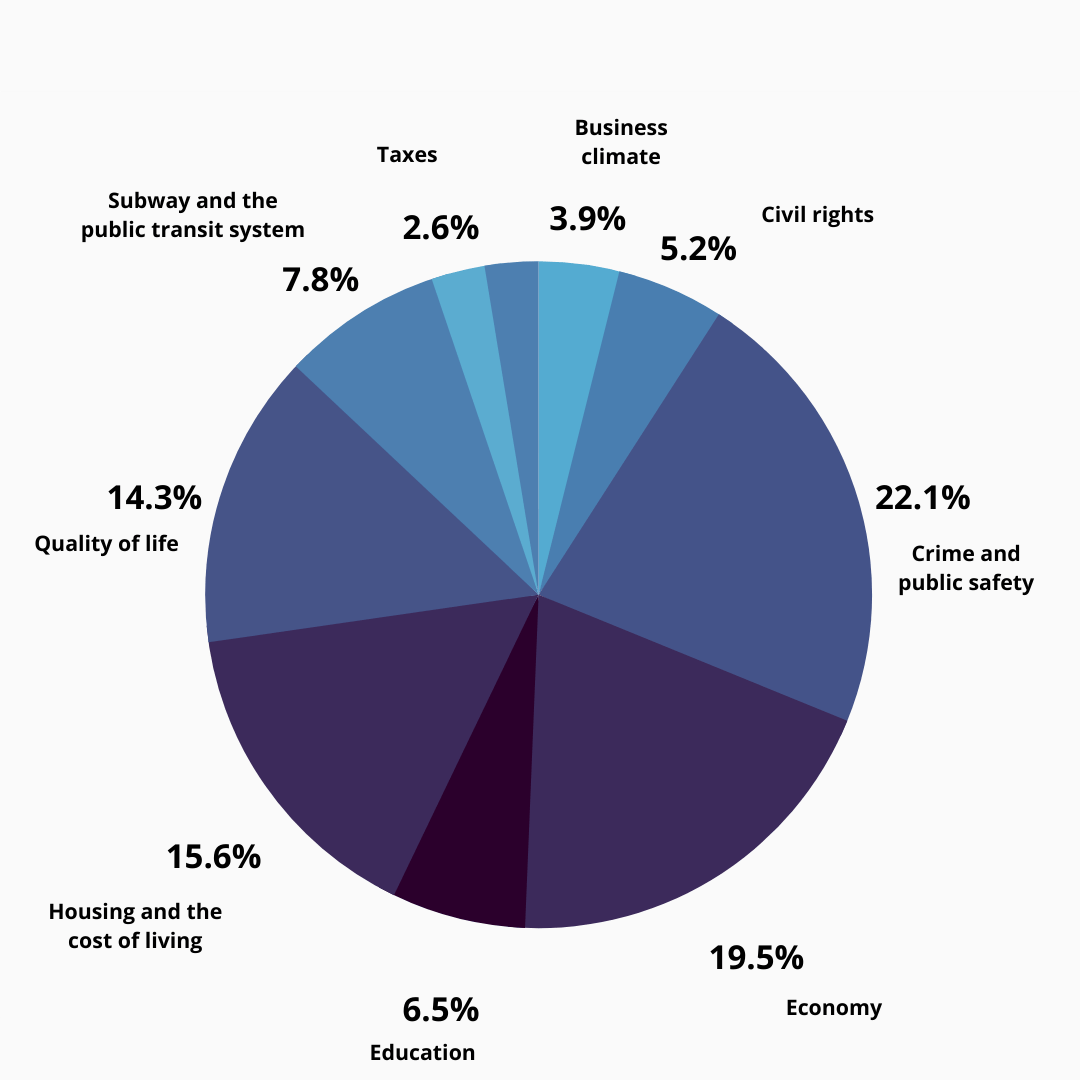
Today's poll
: The Manhattan office market has
as work remains remote and companies like
are wary of the need for a lot of space even when the pandemic ends. Even so, tech companies have
and financial firms have vowed to
this year to help ease life back to normal. When your office reopens, how do you expect to structure your work week?
*|SURVEY: I’ll spend most weekdays in the office|*
*|SURVEY: I’ll spend most weekdays WFH|*
*|SURVEY: I’ll split my time between the office and home equally|*
*|SURVEY: I’ll be in the office full-time|*
*|SURVEY: I’ll be WFH full-time|*
*|SURVEY: I'm not sure|*

Gov. Cuomo announced today that New York will begin giving COVID-19 vaccine supply directly to colleges and universities around the state so they can administer doses to students before they leave campus for the semester. (NBC New York)
At the end of last week, more than two million people rode on the subway on a single day for the first time since the pandemic hit. (New York Daily News) That milestone means ridership is now up to almost half of pre-pandemic levels.
In other transit news: a new round of toll hikes are now in effect at MTA bridges and tunnels. E-ZPass drivers will see an increase from $6.12 to $6.55 while an increase from $9.50 to $10.17 will be charged to those who pay tolls by mail. Major impacted crossings include the Verrazano Bridge, RFK Bridge, and Queens-Midtown Tunnel. (ABC New York)
While the state budget process is done, the federal budget process is just getting started. Pres. Biden released the first of what will be several proposals coming throughout the spring. In it he calls for a 16 percent increase in spending on domestic priorities like education, fighting climate change, and reducing poverty. (POLITICO)
Related reading:
How Epidemiologists Are Planning to Vacation With Their Unvaccinated Kids (New York Times)
Vaccine Passports: What Are They, and Who Might Need One? (New York Times)
How to Make Small Talk After We’ve Been Through...a Pandemic (VICE)
Working:
Zoom, Microsoft’s Teams platform, and other WFH lifelines are beginning to see a decline in mobile usage as offices look to post-pandemic work norms. The next question will be if workplace reopenings will retain an appetite for the virtual tools they relied on during WFH. (Bloomberg)
Despite the pandemic, tech drove the US office market in 2020, with Manhattan remaining in the second spot with leases totaling 1.8 million square feet, closely tailing Seattle which climbed this year to number one. (World Property Journal)
Fortune released its 100 Best Companies to Work For 2021 list. Topping this year’s ranking is Cisco, followed in second place by Salesforce. (Fortune)
Related reading:
Excess work isn’t good for anyone, employers included (New York Times)
3 ways the Best Companies to Work For helped employees endure an unprecedented year (Fortune)
The Office Called. It Wants You To Stop WFH Now (Bloomberg)
Some people can’t wait to dress for work again (Wall Street Journal)
Request: please let us know as your return-to-office policies are developed and what considerations your companies are taking for developing them. Sharing this information is helpful to companies and employees across the NYC ecosystem and can be kept anonymous.
Recruit: A tech talent and job opportunities board from Tech:NYC and AlleyCorp compiles NYC tech workers looking for new roles and NYC-based tech companies hiring open positions. To contribute to the board, click here.Events:
April 14: Virtual: The Future of the Flexible Workplace, with US Senator Kirsten Gillibrand and Twitch chief people officer Lenke Taylor. Hosted by Axios. (Details)
April 14: Virtual: The Future of Trust, with Edelman CEO Richard Edelman, Pew Research Center director Amiy Mitchell, NYU Center for Data Science professor Vasant Dhar, and more. Hosted by the NYC Media Lab. (Details)
April 15: Virtual: Summer Youth Employment Program (SYEP) Employer Showcase for companies who wish to participate in the program in 2021, with NYC Deputy Mayor Phil Thompson. (Details)
April 16: Virtual: Women Investing in Women: The Ecosystem in Action, with FirstMark Capital general partner Beth Ferreira, Acrew Capital founding partner Theresia Gouw, and GingerBread Capital CEO Linnea Roberts. Hosted by GingerBread Capital. (Details)

Check these sources for verified information from government agencies and public health authorities:

Was this digest forwarded to you? Sign up to
.